

Customer Credentials
The customer is a leading industrial equipment manufacturer specializing in precision automation systems used in high-volume manufacturing environments. Their equipment is designed to deliver consistent performance, accuracy, and reliability in demanding production applications where unplanned downtime can significantly impact operational efficiency and profitability.
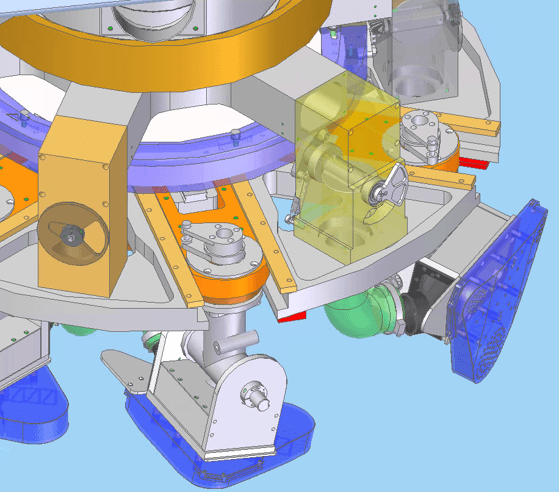
One of the customer's critical automation systems utilized a vacuum chamber assembly as part of a pick-and-place mechanism. The system operated continuously under cyclic loading conditions and was expected to maintain high reliability throughout its service life. However, recurring failures within the assembly began affecting production, prompting the customer to seek engineering support to identify the root cause and develop a sustainable long-term solution.
MN Engineering Solutions (MNES) was engaged to investigate the failure mechanism, evaluate alternative design approaches, and deliver a solution that improved reliability while minimizing disruption to the existing machine architecture.
Challenge
The customer experienced an unexpected shaft failure within the vacuum chamber assembly of a pick-and-place system. Although the equipment was operating within its intended design limits, the shaft was unable to withstand the repeated cyclic loads encountered during normal operation.
The failure resulted in an immediate production shutdown and raised concerns about the long-term durability of the existing design. Replacing failed components addressed the immediate issue but did not eliminate the underlying problem. The customer required a design solution that would prevent future failures without introducing excessive modifications to the surrounding assembly.
Several challenges made the project particularly complex. The vacuum chamber assembly consisted of multiple interconnected components whose performance was influenced by spring forces, inertial effects, vacuum pressure, impact loads, and dynamic motion. Any modification to one component could affect the behavior of the entire mechanism.
Additionally, the customer had practical constraints regarding implementation. While several redesign options appeared technically feasible, the preferred solution needed to minimize changes to existing components, avoid expensive custom parts wherever possible, and maintain manufacturability. The project therefore required more than simply increasing component strength. The challenge was to develop a balanced solution that addressed the root cause of failure while respecting the customer's operational and commercial requirements.
The challenge was to develop a balanced solution that addressed the root cause of failure while respecting the customer's operational and commercial requirements.
Implications
Unplanned Downtime
Each failure resulted in unplanned downtime, disrupting production schedules and affecting delivery commitments. Maintenance teams were required to spend valuable time diagnosing and repairing the equipment, increasing operating costs and reducing overall productivity.
Reliability & Reputation Concerns
Repeated failures created concerns regarding equipment reliability and customer confidence. If left unresolved, the issue could negatively impact the manufacturer's reputation in a competitive market where reliability is often a key purchasing criterion.
Risk of Cascading Damage
From an engineering perspective, continuing to operate with the existing design increased the risk of additional component failures and associated damage to neighboring parts within the assembly.
Need for Robust Solution
The customer needed a solution that would not only eliminate the current failure mode but also improve the overall robustness of the system.
Solution Implemented by MNES
MNES approached the project through a structured engineering process that combined failure investigation, simulation-driven analysis, and collaborative design development.
The first step involved a detailed review of the existing vacuum chamber assembly, including component geometry, maintenance records, operational history, and failure data. Finite Element Analysis (FEA) was performed to evaluate the structural behavior of the shaft assembly under operating conditions. To better understand the dynamic behavior of the system, MNES also performed Rigid Body Dynamics (RBD) simulations replicating the actual operating sequence.
The results of the dynamic simulations were then used as inputs for detailed static and transient structural analyses considering spring forces, impact loading, vacuum pressure effects, inertial loading, flywheel acceleration, and cyclic operating conditions.
Design Iterations
First Proposal
Strengthening the shaft by increasing diameter and wall thickness with higher load-rated bearings. Technically sound but customer preferred to avoid changing bearing specifications.
Second Proposal
Modified shaft diameter and vacuum box bore dimensions while maintaining existing bearing rating. Required changes to bearing face width which the customer wished to avoid.
Third Proposal
Comprehensive redesign involving vacuum box and adjacent components. Demonstrated excellent long-term performance but the level of modification was too extensive.
Fourth Proposal
Replaced custom torsion spring with standard extension spring arrangement. Simplified the mechanism and introduced greater flexibility for future maintenance.
Final Approved Design
The final solution incorporated a double-lobe shaft design together with a redesigned extension spring mechanism. Two extension springs were integrated into the assembly to achieve the required performance under cyclic loading conditions. Using Rigid Body Dynamics analysis, MNES calculated the optimal spring characteristics and verified system behavior under operational loads. Subsequent FEA validation confirmed that the redesigned assembly met fatigue life requirements and delivered the reliability improvements sought by the customer.
Outcome
The project successfully transformed a recurring reliability issue into a robust, validated engineering solution.
- Elimination of the recurring shaft failure mechanism.
- Improved load distribution throughout the assembly.
- Replacement of custom torsion springs with readily available extension springs.
- Reduced stress levels and improved fatigue performance.
- Validation of long-term operational reliability through simulation.
- Achievement of a projected service life exceeding two years under operating conditions.
- Minimized modifications to surrounding equipment.
- Reduced maintenance complexity and replacement costs.
- Improved confidence in equipment reliability and production continuity.
Perhaps most importantly, the project highlighted the value of a collaborative engineering approach. Rather than stopping at the first technically acceptable solution, MNES worked closely with the customer through multiple design iterations, incorporating feedback at every stage until a practical, manufacturable, and reliable solution was achieved.
By combining advanced simulation techniques with responsive engineering support, MN Engineering Solutions helped the customer eliminate a critical failure mode, improve equipment reliability, and restore confidence in the long-term performance of the vacuum chamber assembly.
PAD Turner Assembly