


Customer Background
A leading U.S.-based manufacturer of diaper production machinery was experiencing rapid growth driven by increasing demand for high-speed, cost-effective hygiene manufacturing equipment.
As the business expanded, the company faced a familiar challenge encountered by many machinery OEMs: engineering demand was growing faster than internal engineering capacity.
New product development initiatives, customer-specific machine configurations, performance enhancement projects, and continuous engineering changes were competing for the same internal resources. While the company wanted to accelerate innovation and shorten delivery timelines, scaling its engineering team locally was becoming increasingly difficult due to hiring constraints, rising costs, and the time required to onboard specialized machine design engineers.
The company needed a scalable engineering model that would provide long-term capacity without sacrificing engineering quality, product knowledge, or responsiveness.
The Challenge
The client required more than traditional outsourced design support.
Their objective was to establish a dedicated engineering organization capable of functioning as a true extension of their internal engineering department.
The solution needed to:
- Increase available engineering bandwidth.
- Support ongoing product development programs.
- Handle machine customization and engineering changes.
- Retain product knowledge within a stable team.
- Scale resources as business needs evolved.
- Integrate seamlessly with existing engineering processes.
Most importantly, the client wanted engineers who could think and operate like members of their own engineering team rather than external contractors working on isolated tasks.
The MN Engineering Solutions Approach
MN Engineering Solutions established a dedicated Offshore Development Center (ODC) exclusively focused on supporting the client's engineering operations.
The ODC was structured to mirror the client's engineering organization and operate as an integrated extension of their team.
A dedicated group of engineers was assigned exclusively to the account, ensuring continuity, product knowledge retention, and long-term ownership of engineering activities.
The offshore team participated in the same engineering discussions, design reviews, project planning sessions, and development initiatives as the client's internal engineers.
This approach enabled the client to expand engineering capacity without increasing internal headcount while maintaining complete alignment with existing processes and standards.
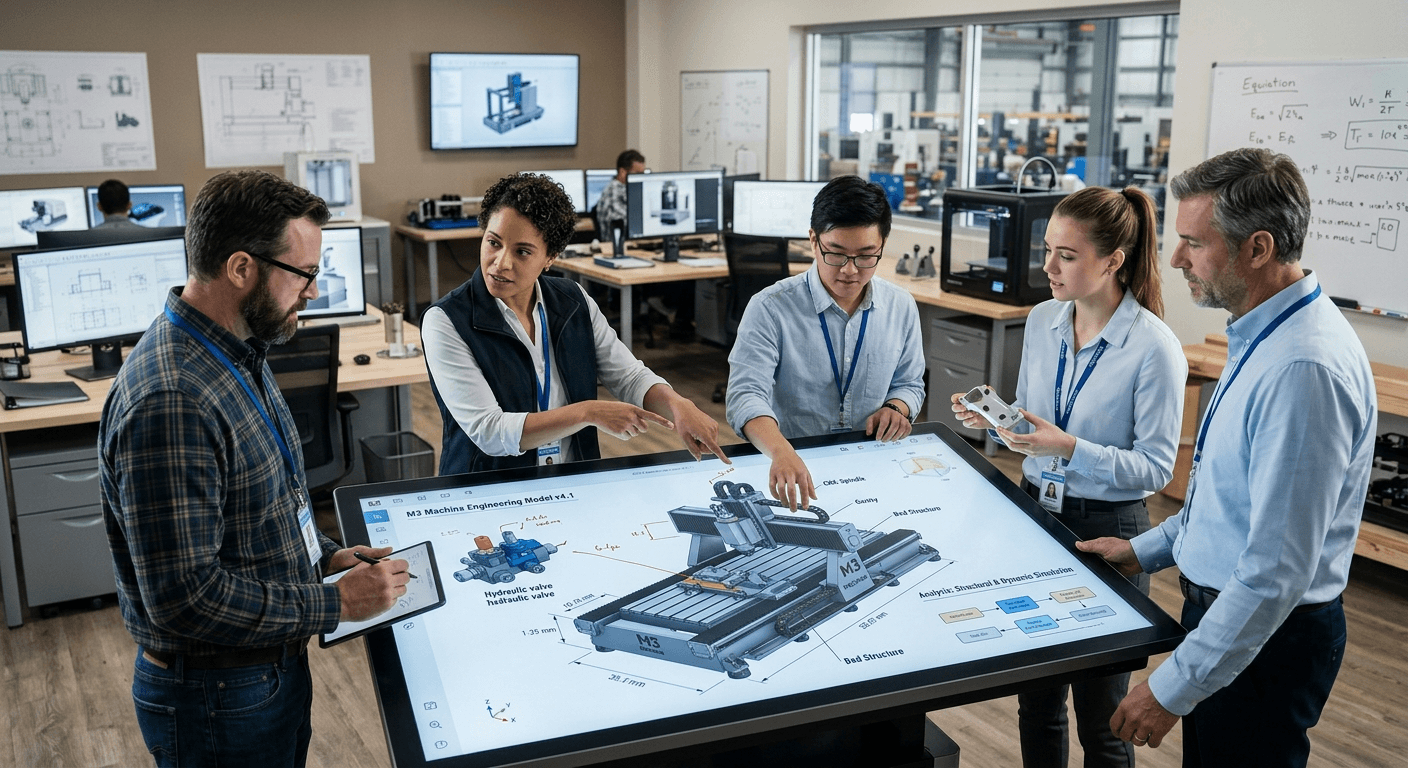
Building an Engineering Team with Product Ownership
A carefully selected team of mechanical design engineers was assembled based on experience in industrial machinery, automation systems, and special-purpose equipment.
Extensive onboarding was conducted to transfer knowledge related to:
- Machine architecture.
- Design standards.
- Product development processes.
- Engineering review procedures.
- Change management systems.
- Manufacturing requirements.
Over time, the offshore engineers developed deep expertise in the client's products and became capable of independently executing engineering workstreams with the same level of ownership expected from internal engineering personnel.
The team evolved from task execution to product ownership.
Supporting Product Development and Machine Evolution
The Offshore Development Center became actively involved in the client's engineering roadmap.
The team supported:
- Development of new machine modules.
- Enhancement of existing machine platforms.
- Customer-specific machine customization.
- Performance improvement initiatives.
- Cost reduction programs.
- Engineering standardization efforts.
Rather than simply executing design requests, the offshore team contributed engineering insight and collaborated with the client's leadership on product evolution initiatives.
This significantly increased the client's ability to pursue multiple engineering programs simultaneously.
A Scalable Engineering Organization
One of the greatest advantages of the ODC model was its ability to scale.
As engineering workloads fluctuated due to new customer projects, product upgrades, or strategic development initiatives, resources could be expanded quickly without the delays associated with local recruitment.
The client gained access to a flexible engineering organization that could grow alongside the business while maintaining continuity and accumulated product knowledge.
This allowed internal engineering leaders to focus on innovation, technology strategy, and customer engagement rather than resource constraints.
Results
The Offshore Development Center became a trusted extension of the client's engineering organization.
The engagement delivered measurable business benefits, including:
- Expanded engineering capacity without significant internal hiring.
- Faster execution of product development projects.
- Improved responsiveness to customer customization requirements.
- Greater engineering focus on innovation and strategic initiatives.
- Reduced development bottlenecks.
- Enhanced ability to support business growth.
- Long-term retention of product knowledge within a dedicated engineering team.
Most importantly, the client established a sustainable engineering model that provided the same functional capability as an internal engineering department while offering greater flexibility and cost efficiency.
Conclusion
MN Engineering Solutions helped the client build a dedicated offshore engineering organization rather than simply providing outsourced engineering services.
By creating an integrated Offshore Development Center that functioned as an extension of the client's engineering team, MN Engineering Solutions enabled the manufacturer to scale engineering capacity, accelerate product development, and support continued business growth.
The engagement demonstrates how a dedicated ODC model can become a strategic asset for machinery manufacturers seeking to expand engineering capability while maintaining speed, quality, and competitiveness.