MNES Logo
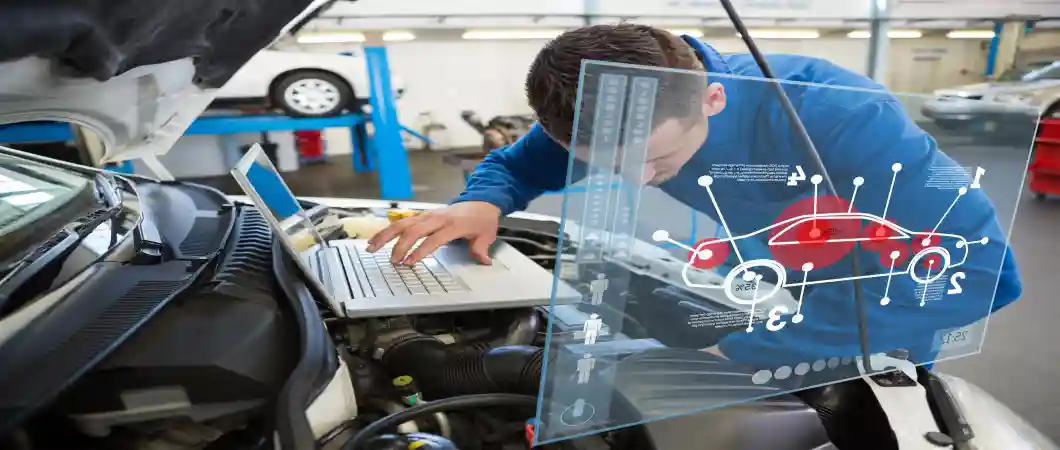
Functional safety validation for automotive electronics using ECU diagnostics and vehicle health monitoring

Functional Safety in
Automotive

Driving the Future, Safely — Where Innovation
Meets ISO 26262 Assurance

With the rapid advancement of modern vehicles powered and regulated by sophisticated Electronic Control Units (ECUs), the demand for safe, intelligent, and reliable automotive electronics has never been higher. As these electronic systems become the backbone of critical vehicle functions—from braking and steering to power management and ADAS—the need for advanced safety measures has become more critical than ever.

Functional safety in automotive electronics plays a vital role throughout the ECU software development lifecycle, ensuring that both hardware and software systems perform reliably—even in the event of internal faults or external disruptions. This is essential for preventing failures that could compromise vehicle safety or driver control.

At its core, automotive functional safety focuses on identifying, assessing, and mitigating potential risks arising from malfunctions in electronic and electrical systems. Through structured functional safety analysis and risk classification, manufacturers can define, implement, and validate safety mechanisms that prevent or minimize hazards in real-world driving scenarios.

These practices are governed by the internationally recognized ISO 26262 standard, which provides a comprehensive framework for achieving and maintaining high levels of functional safety in automotive electronics. Compliance with this standard ensures that electronic systems are not only high-performing but also robust, fail-safe, and aligned with the safety expectations of modern mobility.

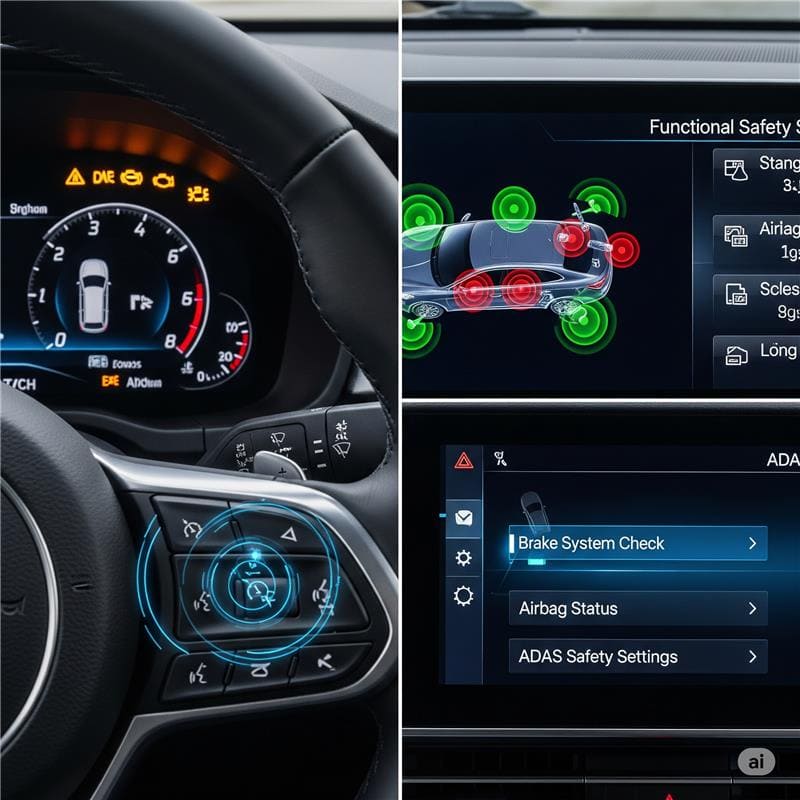
Automotive functional safety monitoring featuring ADAS, vehicle diagnostics, and electronic safety systems

How does MNES add value?

Experience Icon

Deep Multi-Domain Automotive Experience

Trusted Icon

Trusted in Complex Safety Projects

Expertise Icon

End-to-End Functional Safety Expertise

Platforms Icon

Expertise Across Key Platforms

Our Services for

Functional Safety (FuSa)

CONCEPT DEVELOPMENT

We define safety-critical items, assess risks (HARA), set high-level safety goals (FSC), and establish functional safety requirements and management processes.

SYSTEM DEVELOPMENT

We convert safety goals into technical solutions (TSC), allocate safety responsibilities, and conduct detailed system-level risk analyses like FMEA and FTA.

SOFTWARE DEVELOPMENT

We define and implement safety-focused software requirements, conduct testing, provide expert reviews, and perform software-level risk assessments (SW FMEA).

Our Capabilities

Functional Safety: Engineering Confidence into Every Mile.

  • Safety Product Lifecycle Management
  • AUTOSAR BSW Safety Implementations
  • FuSa Level 3 Safety Pack Integration and Testing
  • System Capabilities for Automotive Safety
  • Semiconductor Safety Development Lifecycle
  • Zonal and HPC Architectures, Electrified Powertrains (E-PWT), and Advanced Driver Assistance Systems (ADAS).

Frequently asked questions

Functional safety in automotive ensures that electronic and electrical systems in vehicles operate safely, even when faults occur. It involves designing systems to detect, prevent, or mitigate risks caused by hardware or software failures.

With the growing complexity of ECUs, sensors, and automated systems, functional safety is critical to avoid dangerous failures that could compromise passenger safety or system performance.

ISO 26262 is an international standard for functional safety in automotive systems. It outlines the safety lifecycle and provides guidelines for risk assessment, design, implementation, verification, and validation of safety-critical functions.

ASIL (Automotive Safety Integrity Level) is a risk classification system defined in ISO 26262. It ranges from ASIL A (lowest) to ASIL D (highest) based on the severity, exposure, and controllability of potential hazards.

HARA (Hazard Analysis and Risk Assessment) is the process of identifying potential hazards and determining the necessary ASIL. It forms the foundation for setting functional safety goals.

Techniques like FMEA (Failure Mode and Effects Analysis), FTA (Fault Tree Analysis), and FMEDA (Failure Modes, Effects, and Diagnostic Analysis) are used to identify, analyze, and address potential failure modes.

Not all, but any system that could affect vehicle safety—such as steering, braking, or ADAS—must meet ISO 26262 requirements depending on its safety impact and assigned ASIL.

Typical deliverables include safety plans, HARA, FSC/TSC documents, safety requirements, verification reports, safety analysis reports, and a safety case summary.

Let’s talk

From custom demos to customization - we are here to delight you

USA (HQ)

332 S Michigan Ave Suite 121 # 5695
Chicago, IL 60604.

+1 (269) 625-5034

USA

2412 W Heather Road, Suite 210,
Wilmington, DE 19803.

+1 (269) 625-5034

USA

32C Germay Dr,
Wilmington, DE 19804.

+1 (269) 625-5034

India (HQ)

5th floor, BNT Connections, 126,
Nelson Manickam Rd, Railway Colony,
Aminjikarai, Chennai, Tamil Nadu 600030.

+91 89258 29574

The images of projects displayed on this website are not owned by our company and may be subject to third-party copyrights. We disclaim any liability for copyright infringement related to these images. The data provided on this site is for informational purposes only, based on our internal estimates. This information is not intended to serve as an indication of Key Performance Indicators (KPIs) and is provided "as is" without any warranties, either express or implied, regarding its accuracy, completeness, or reliability.

© 2026 MN Groups. All rights reserved.