


Customer Credentials
Our client is an EV mobility solutions provider focused on improving passenger safety, occupancy visibility, and fleet monitoring for electric vehicle transportation systems. The solution was designed for applications such as shared mobility services, school and corporate shuttles, public EV transport systems, and ride-hailing fleets.
To enhance operational efficiency by implementing an intelligent passenger monitoring solution capable of providing real-time occupancy information while improving the overall passenger experience.
Challenge
The client required a smart and scalable passenger tracking system capable of monitoring real-time occupancy inside electric vehicles while also displaying passenger notifications and advertisement content.
The system needed to function reliably within automotive environments where installation space, power management, and connectivity were critical challenges. In addition, the client required a solution that could be deployed quickly across multiple vehicles with minimal commissioning effort.
The project demanded integration between hardware devices, embedded software, communication protocols, and display systems to create a stable in-vehicle monitoring platform.
Implications of the Problem
Lack of Real-Time Visibility
Lack of real-time passenger occupancy visibility across vehicles, making it difficult to monitor passenger movement and seating availability.
Manual Monitoring Dependency
Increased dependency on manual monitoring and verification, resulting in reduced operational efficiency and higher labour requirements.
Limited Remote Management
Difficulty in remotely managing fleet-related information due to limited communication between in-vehicle devices and cloud platforms.
Longer Installation & Limited Scalability
Longer installation and commissioning time for every vehicle because of manual hardware configuration and software setup. Limited scalability for future fleet deployment caused by inconsistent hardware integration and non-standardized installation practices.
Solution Implemented by MNES
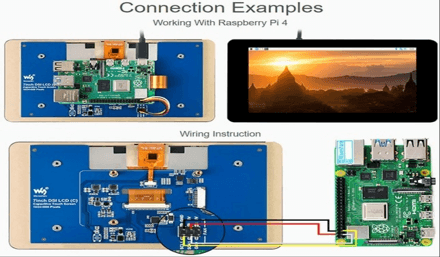
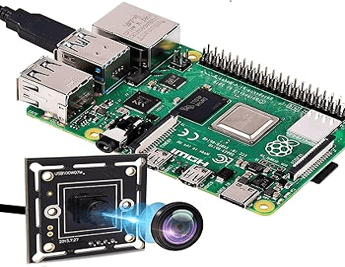
MNES developed a Raspberry Pi-based smart passenger tracking and occupancy indication system integrated with camera monitoring, relay automation, embedded display systems, and remote communication infrastructure. The complete solution included both hardware and software integration optimized for EV vehicle environments.
System Features
Engineering & Deployment
To ensure reliable installation, simplified deployment, and long-term operational stability, MNES developed a standardized engineering and deployment framework that included:
Secure Hardware Mounting
Designed robust mounting structures to securely install all embedded hardware components, ensuring reliable operation under vehicle vibration and movement.
Standardized Wiring Architecture
Developed a structured wiring design to simplify installation, reduce wiring errors, and improve maintainability across multiple vehicle platforms.
Automated First-Boot Configuration
Implemented automated setup for Wi-Fi connectivity, hostname assignment, and network initialization, eliminating the need for manual software configuration during deployment.
Remote Diagnostics & Update Infrastructure
Built a remote diagnostics framework with update-ready capabilities, enabling efficient troubleshooting, software maintenance, and future feature enhancements.
Automotive Power Management
Integrated an automotive grade 12V to 5V DC power conversion system to provide stable and reliable power to embedded devices while protecting them from voltage fluctuations.
Pre-Configured Software Image
Created a ready-to-deploy Raspberry Pi software image with all required drivers, applications, and configurations pre-installed, significantly reducing commissioning time.
Rapid Fleet Deployment
Established a standardized deployment process that enabled faster installation, consistent system configuration, and seamless rollout across multiple electric vehicles.
Enhanced Operational Reliability
Optimized the overall hardware and software architecture to ensure continuous operation, minimize downtime, and improve long-term system performance in automotive environments.
Solution Architecture Diagrams
The Outcome or Results
By implementing the smart passenger tracking solution, MNES enabled the client to achieve a reliable and scalable EV monitoring platform. Key results included:
- Real-Time Occupancy Monitoring: Enabled automatic passenger detection and occupancy indication through camera-based monitoring, providing fleet operators with improved visibility into vehicle occupancy.
- Reduced Installation & Commissioning Time: Pre-configured software images, standardized wiring architecture, and automated configuration significantly reduced deployment time across multiple vehicles.
- Improved Operational Reliability: Automotive-grade power management and an integrated hardware-software architecture ensured stable and continuous operation in demanding vehicle environments.
- Remote Monitoring Readiness: MQTT and API integration established secure cloud connectivity, enabling centralized monitoring, diagnostics, and future fleet management capabilities.
- Scalable Fleet Deployment: The modular and standardized system architecture allowed rapid expansion across additional electric vehicles without major engineering modifications.
- Lower Maintenance Costs: Standardized hardware integration and remote diagnostics simplified troubleshooting, reduced maintenance effort, and minimized operational downtime.