


Project Overview
In industrial manufacturing, operational continuity is heavily dependent on the immediate availability of critical control and electrical components. For this project, a comprehensive technical audit and asset scrubbing initiative was executed on the Bill of Materials (BOM) for seven (7) distinct production machines.
The primary objective was to thoroughly evaluate the client's raw engineering data, determine the exact commercial lifecycle status of every line item, identify obsolescence risks, and generate a highly reliable, execution-ready Recommended Spare Parts List. The ultimate business goal was to build a protective operational buffer that minimizes system downtime while preventing capital from being tied up in unneeded inventory.
The Challenges
Data Corruption & Missing Details
The initial input provided by the client was an unrefined, legacy master Excel sheet containing incomplete part profiles, corrupt part numbers, missing vendor names, and ambiguous technical data.
Complex Corporate M&A Trajectories
The industrial automation landscape experiences frequent corporate shifts. Tracking down active components required navigating a complex history of brand mergers, acquisitions, and discontinued product series.
The Gray-Market Fallacy
Many parts appeared readily available on unauthorized, third-party resale websites. Relying on these sources poses a major risk to industrial operations, as they do not provide verified manufacturer lifecycle support, factory warranties, or long-term component availability.
Engineering Dependency vs. Drop-In
While minor components could be easily swapped out, critical control elements such as legacy PLCs, communication modules, and precision pneumatic valves presented complex obsolescence requiring deep electrical redesign, software migration, or physical panel modifications.
MN Engineering Solutions Approach
A systematic, multi-tiered engineering workflow was implemented to audit, scrub, and categorize every line item across all seven machines.
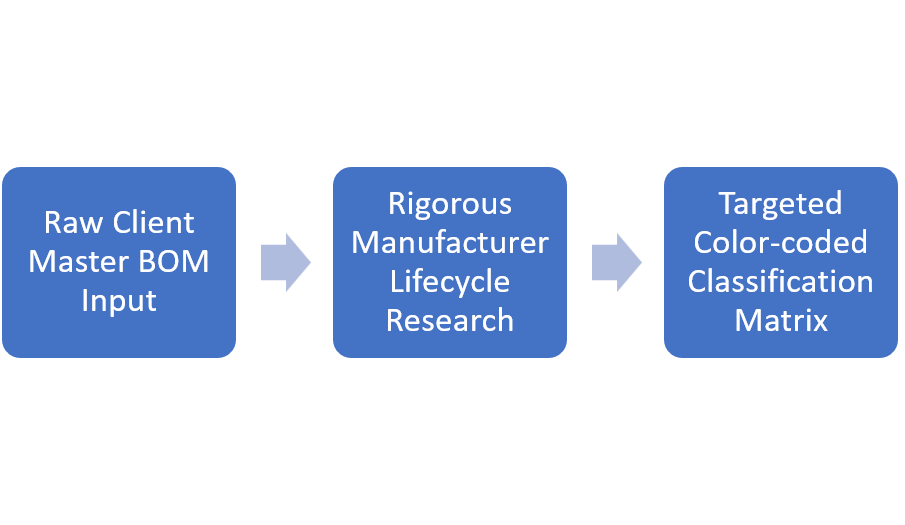
Rigorous Research & Visual Classification
A strict policy was enforced: third-party resale links were entirely ignored. Component validity was checked exclusively through official manufacturer portals, direct product management channels, and authorized migration matrices.
Enforced Classification & Visual Scripting Logic
A rigorous color-coded taxonomy was applied directly to the master dataset to map out clear operational directions for plant maintenance:
- Structural Exclusions (Red Font / Strikethrough): Non-operational structural components marked out to prevent unnecessary inventory spending.
- Active Inventory (Green Highlight): Active, fully supported parts approved for spare procurement with quantities determined using a strict 20% Minimum Ceiling Rule.
- Obsolete / Direct Substitution (Orange Highlight): Discontinued items with verified 1:1 functional drop-in replacements mapped to active part numbers.
- Obsolete / Engineering Required (Orange Highlight with Warning): Complex legacy control components flagged with mandatory notation for engineering redesign.
- Clarification Tracking (Blue Highlight): Corrupted or unidentifiable part rows isolated with specific inquiries for nameplate photos or schematic details.
Engineering Impact & Optimization Results
- Successfully audited and optimized spare parts recommendations across seven production machines
- Eliminated unauthorized gray-market procurement dependency through 100% manufacturer-authorized lifecycle verification
- Reduced unnecessary inventory allocation by filtering non-operational structural components
- Improved spare inventory planning accuracy through standardized stock quantity calculations
- Established clear engineering migration visibility for obsolete automation assets
- Improved long-term sourcing reliability and maintenance preparedness
Key Results & Business Impacts
- 7 Segmented Deliverables: Delivered seven standalone, fully optimized, machine-specific Excel spreadsheets ready for immediate procurement use.
- 100% Verified Lifecycle Transparency: Eliminated gray-market procurement risks by ensuring all active and alternative recommendations are completely backed by authorized manufacturer guarantees.
- Optimized Procurement & Capex Allocation: Successfully reduced unnecessary inventory investment by filtering non-operational structural components and improving procurement optimization strategies.
- Maintenance Readiness & Lifecycle Risk Mitigation: Improved plant maintenance preparedness and minimized lifecycle risks by establishing standardized spare stocking strategies.
- Engineering Migration Visibility & Asset Sustainability Planning: Delivered clear engineering migration visibility for obsolete automation systems.
- Enhanced Long-Term Operational Reliability: Established a structured spare parts lifecycle management framework that improved sourcing reliability and operational sustainability.
Key Learnings
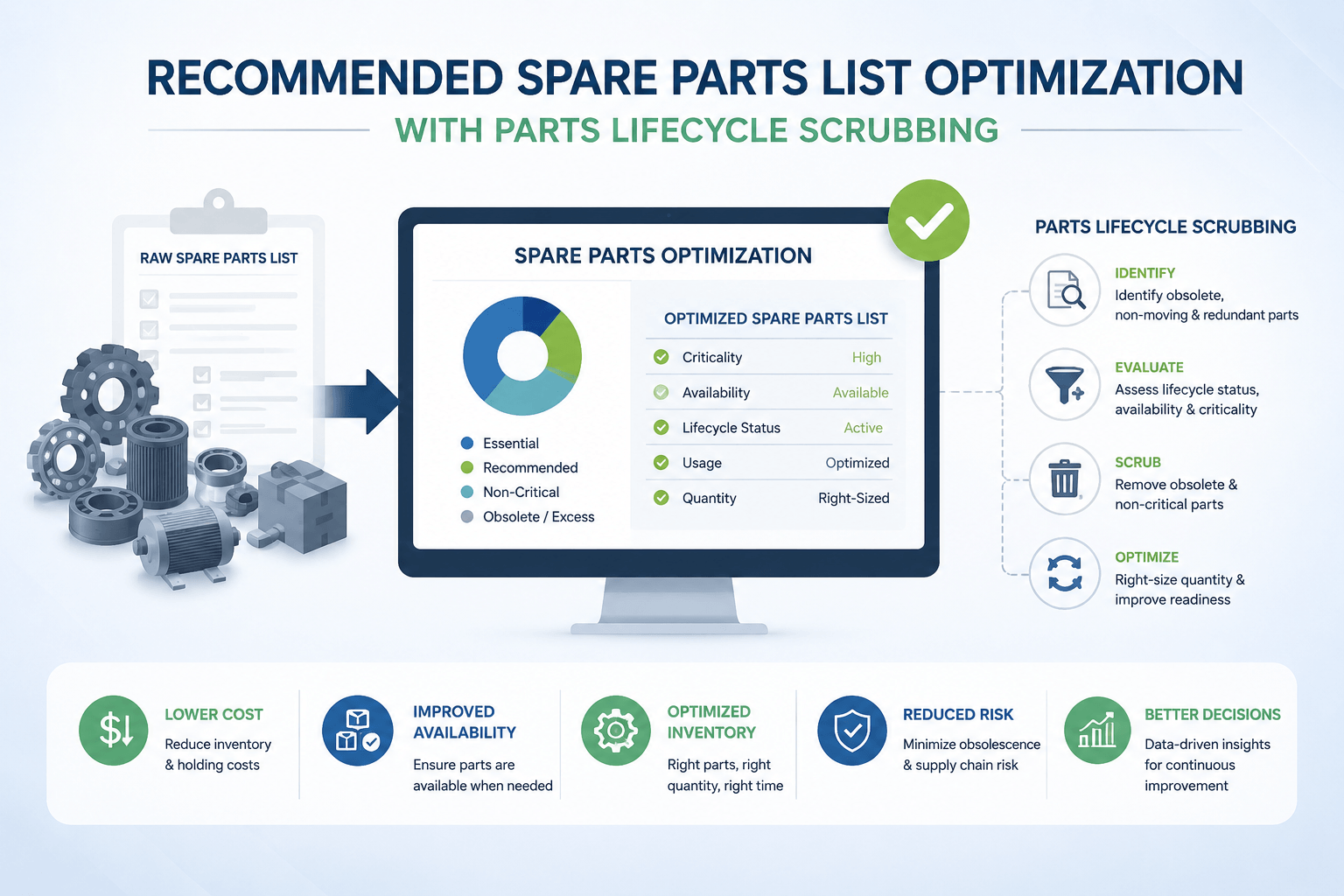
The lifecycle optimization initiative established a structured spare parts management framework that improved procurement reliability, maintenance preparedness, and long-term operational sustainability across all seven production systems.
- Accurate spare parts planning requires validated manufacturer lifecycle visibility.
- Gray-market sourcing introduces major operational and reliability risks in industrial environments.
- Structured component classification improves maintenance decision-making efficiency.
- Obsolete automation systems often require engineering redesign rather than direct replacement.
- Inventory optimization must balance operational continuity with capital expenditure control.
- Standardized lifecycle scrubbing workflows improve long-term plant maintenance planning.
Conclusion
The Recommended Spare Parts List Optimization & Lifecycle Scrubbing Project successfully transformed fragmented legacy BOM data into a structured, reliable, and procurement-ready spare parts management system. Through manufacturer-authorized lifecycle verification, inventory optimization, and engineering dependency assessment, the project improved plant maintenance readiness, reduced procurement risks, and enhanced long-term operational reliability across all seven production systems.